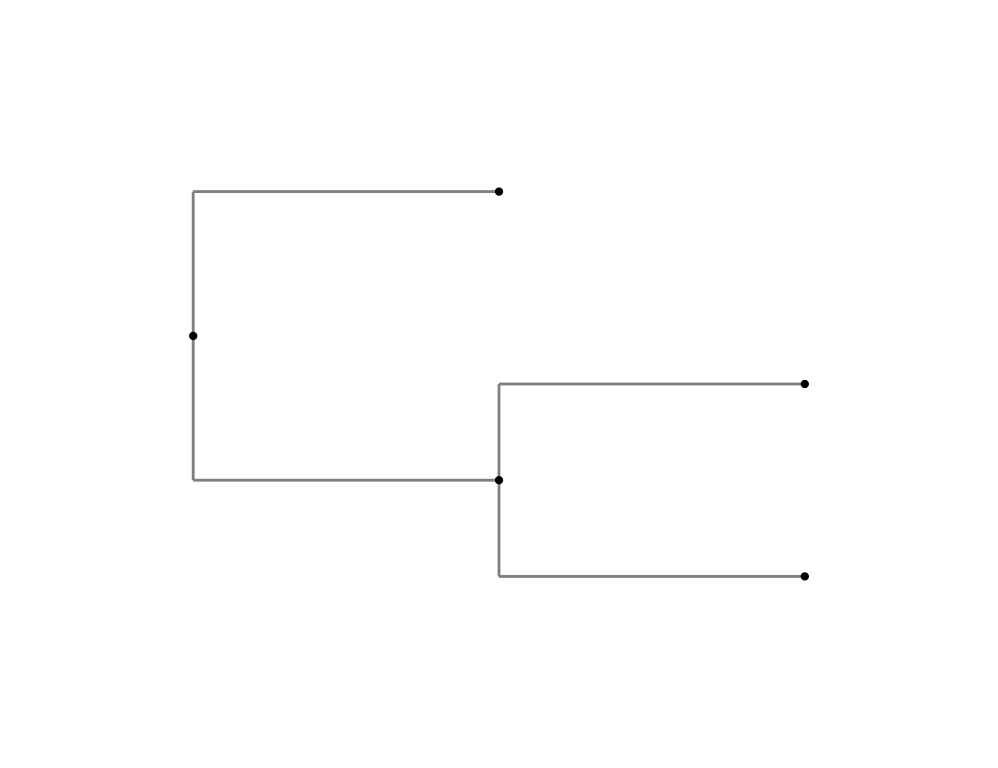
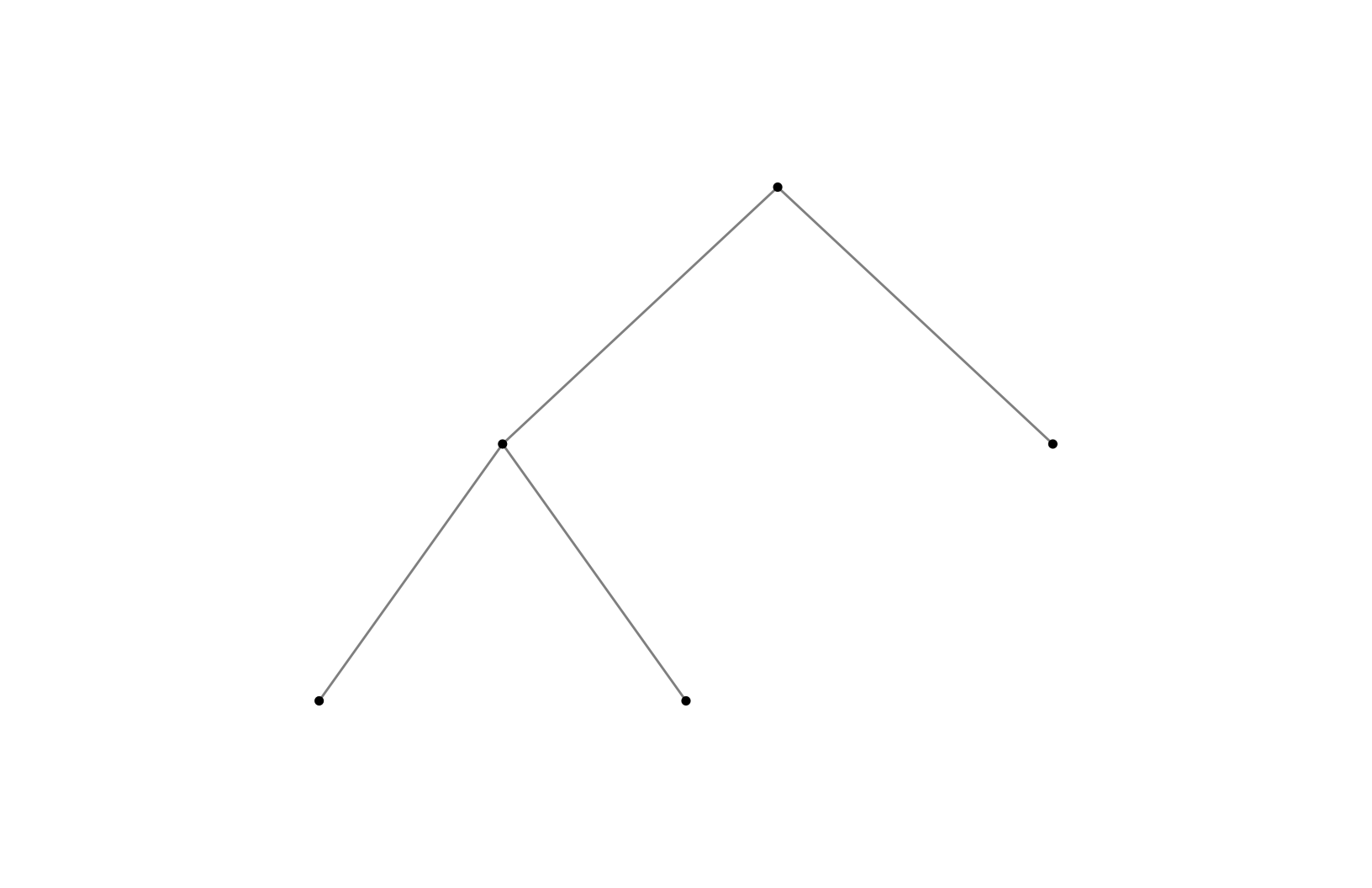
Arranges a rooted hierarchy: leaves spread left-to-right in merge-side order and internal nodes sit at the mean leaf position of their children. Self-contained (no external dependency). Edges must point from parent to child; multiple roots (forests) are supported.
Usage
layout_tree(
  plot,
  direction = c("down", "up", "left", "right"),
  leaf_spacing = "count",
  edge = "straight"
)
Arguments
- plot
A
plotitobject holding graph data (created viaas_graph()+plotit()), or a bareplotit_graph.- direction
Direction the tree grows:
"down"(root on top),"up","right", or"left".- leaf_spacing
Leaf placement:
"count"packs leaves one unit apart in merge-side order (d3 tidy-tree);"equal"normalises leaves onto[0, 1]so leaf slots align with split-facet panels.- edge
Edge shape:
"straight"(direct parent-child segments) or"elbow"(right-angle bend via a midpoint row pair; each edge becomes two rows in the edges table somark_rule()renders the polyline).
Value
A modified plotit object (pipeline form), or a new
plotit_graph when called on raw graph data.
Examples
h <- data.frame(
id = c("root", "A", "B", "a1", "a2"),
parent = c(NA, "root", "root", "A", "A")
)
as_graph(h) |>
plotit() |>
layout_tree(direction = "down") |>
mark_rule(data = ~edges) |>
mark_point(data = ~nodes)
 as_graph(h) |>
plotit() |>
layout_tree(direction = "right", edge = "elbow") |>
mark_rule(data = ~edges) |>
mark_point(data = ~nodes)
as_graph(h) |>
plotit() |>
layout_tree(direction = "right", edge = "elbow") |>
mark_rule(data = ~edges) |>
mark_point(data = ~nodes)